Inground Pools in South Florida: Cost, Types & Complete Homeowner Guide
An inground swimming pool can completely change how a South Florida home is used. Instead of treating the backyard as unused outdoor space, homeowners can create an environment for swimming, entertaining, relaxing, exercising, and spending time with family throughout much of the year.
South Florida’s warm climate makes inground pools especially attractive, but building one requires considerably more planning than simply choosing a shape and selecting a finish. Homeowners need to consider construction type, budget, property size, soil and groundwater conditions, permits, pool equipment, decking, safety requirements, maintenance, energy consumption, and the overall backyard design.
One of the most common questions is how much an inground pool costs in South Florida. Another is which type of pool is best: concrete, fiberglass, or another option.
There is no single answer that works for every property. The best inground pool depends on the homeowner’s budget, desired level of customization, available space, architectural style, and long-term expectations.
This complete homeowner guide explains the major types of inground pools, typical cost considerations, construction process, permits, popular features, maintenance requirements, and what South Florida homeowners should know before choosing a pool builder.
What Is an Inground Pool?
An inground pool is a permanent swimming pool constructed partially or completely below the surrounding ground level.
Unlike an above-ground pool, an inground pool becomes a permanent component of the property and is generally integrated with decking, landscaping, drainage, electrical systems, plumbing, and outdoor living areas.
Inground swimming pools can be built using different construction systems, with concrete and fiberglass among the most familiar residential options.
The construction method affects design flexibility, installation, maintenance, finish options, and overall project cost.
Why Inground Pools Are Popular in South Florida
South Florida provides an environment where homeowners can use outdoor living spaces during much of the year.
Swimming pools therefore often function as more than recreational features. They can become the centerpiece of the entire backyard.
Year-Round Outdoor Living
While seasonal temperature changes still affect pool use, South Florida generally provides a much longer outdoor season than colder parts of the country.
Adding a pool heater can further extend comfortable swimming conditions during cooler periods.
Backyard Entertainment
An inground pool can anchor an outdoor entertainment environment that includes lounge areas, dining spaces, outdoor kitchens, pergolas, landscaping, fire features, and integrated spas.
Customization
Inground pools can be designed around the architecture and dimensions of a property rather than appearing as temporary additions.
Property Appeal
In communities where swimming pools and outdoor living are common, an attractive and well-maintained pool can increase buyer interest.
However, homeowners should not assume that pool construction will generate a guaranteed financial return. Property value depends on location, neighborhood expectations, construction quality, condition, and real estate market conditions.
How Much Does an Inground Pool Cost in South Florida?
Inground pool costs vary substantially.
For general planning purposes, a professionally installed residential inground pool in South Florida may begin around $60,000 to $80,000, while customized projects can commonly reach $80,000 to $150,000 or more.
Luxury pools and complete backyard projects can exceed $150,000 to $300,000+, particularly when they include integrated spas, infinity edges, extensive decking, premium materials, water features, outdoor kitchens, pergolas, landscaping, and advanced automation.
These figures are broad planning estimates rather than guaranteed quotes. Actual pricing depends on the property, municipality, pool dimensions, construction system, site conditions, materials, engineering, equipment, and project scope.
Basic Inground Pool
A relatively straightforward project may include a simple pool shape, standard finish, essential equipment, basic lighting, coping, and a limited deck area.
Homeowners should verify exactly what is included because heating, upgraded finishes, expanded decking, landscaping, automation, fencing, or other improvements may be separate.
Custom Inground Pool
A custom project may include upgraded materials and features such as a tanning ledge, integrated spa, premium tile, quartz or pebble finish, upgraded decking, LED lighting, automation, and water features.
Luxury Inground Pool
Luxury projects are typically designed as complete outdoor environments rather than isolated swimming pools.
They may incorporate an infinity edge, raised spa, fire features, outdoor kitchen, custom landscaping, premium porcelain or natural stone, architectural lighting, and covered entertainment areas.
What Affects the Cost of an Inground Pool?
Pool dimensions are important, but they are only one part of the total investment.
Two pools with similar dimensions may have very different costs because of site conditions, construction methods, finishes, and features.
Pool Size
Larger pools generally require more excavation, structural material, plumbing, finish material, and labor.
However, a smaller pool with extensive customization can cost more than a larger basic pool.
Pool Depth
Additional depth affects excavation and structural requirements.
Homeowners should choose depth based on how the pool will actually be used rather than assuming deeper is always better.
Pool Shape
Rectangular and other simple geometric pools can be relatively efficient to construct.
Complex curves, multiple elevations, custom walls, and unusual configurations may require additional labor and engineering.
Backyard Access
Easy access for excavation equipment can simplify construction.
Narrow side yards, walls, mature landscaping, neighboring structures, or other obstacles can make site preparation and material movement more complicated.
Site Conditions
Soil characteristics, groundwater, drainage, elevation, and proximity to structures can all affect the project.
These conditions are especially important in South Florida, where groundwater levels and heavy rainfall must be considered.
Material Selection
Interior finishes, tile, coping, and decking range from functional standard materials to premium products.
Material upgrades can significantly affect the total project budget.
Types of Inground Pools in South Florida
Homeowners comparing inground pools will typically encounter several construction options.
Understanding their differences is important before requesting estimates.
Concrete Inground Pools
Concrete pools are particularly popular for custom South Florida projects because they provide extensive design flexibility.
The structural shell is built on site, allowing the pool to be designed around the property.
Advantages of Concrete Pools
Concrete pools can accommodate:
- Custom shapes
- Custom depths
- Geometric designs
- Freeform designs
- Integrated spas
- Sun shelves
- Built-in benches
- Custom steps
- Infinity edges
- Raised walls
- Water features
This flexibility makes concrete an attractive choice for homeowners who want the pool to become part of a complete architectural backyard design.
Disadvantages of Concrete Pools
Concrete pool construction generally requires more time than installing a prefabricated shell.
The interior finish also requires long-term maintenance and eventual resurfacing.
The total project cost can increase substantially as custom structural features and premium finishes are added.
Who Should Choose a Concrete Pool?
Concrete is especially appropriate for homeowners who prioritize customization and want the pool designed specifically around the property.
It is also frequently selected for high-end outdoor living projects.
Fiberglass Inground Pools
Fiberglass pools use a prefabricated shell manufactured before arriving at the property.
The shell is transported to the site and placed into the prepared excavation.
Advantages of Fiberglass Pools
Potential advantages include:
- Faster installation
- Smooth surface
- Relatively predictable shell design
- Lower surface maintenance requirements than some traditional finishes
Because the shell is manufactured in advance, construction can be more standardized.
Disadvantages of Fiberglass Pools
The primary limitation is customization.
Homeowners select from available manufacturer molds rather than creating an entirely custom shell.
Transportation and property access can also limit what can be installed.
Large equipment may need sufficient access to deliver and position the shell.
Who Should Choose a Fiberglass Pool?
Fiberglass can be attractive for homeowners who prefer a more standardized pool and prioritize installation speed over unlimited customization.
Vinyl-Liner Inground Pools
Vinyl-liner pools use a structural frame with a flexible liner forming the interior surface.
They are more common in some parts of the United States than in high-end South Florida custom pool construction.
Advantages of Vinyl-Liner Pools
Vinyl pools may offer lower initial costs in some markets and provide a smooth interior surface.
Disadvantages of Vinyl-Liner Pools
The liner eventually requires replacement and can potentially be punctured or damaged.
Design and finish options may also be more limited than with custom concrete construction.
South Florida homeowners should evaluate local contractor availability, environmental suitability, maintenance, and long-term replacement costs before choosing this system.
Concrete vs. Fiberglass Inground Pools
The decision between concrete and fiberglass depends largely on the homeowner’s priorities.
Concrete offers greater customization. Fiberglass offers a prefabricated construction system that can potentially reduce installation time.
A homeowner wanting a highly customized geometric pool with an integrated spa, large sun shelf, custom depth, and architectural water features will generally find more flexibility with concrete.
A homeowner who likes an available fiberglass shell and prioritizes a more standardized installation may prefer fiberglass.
Neither option should be selected solely according to initial price.
Long-term maintenance, design flexibility, property access, expected lifespan, finish requirements, and future renovation options should all be considered.
Best Inground Pool Designs for South Florida Homes
The best design depends on the property and architectural style.
Several configurations are particularly popular.
Geometric Inground Pools
Geometric pools use clean lines and defined shapes.
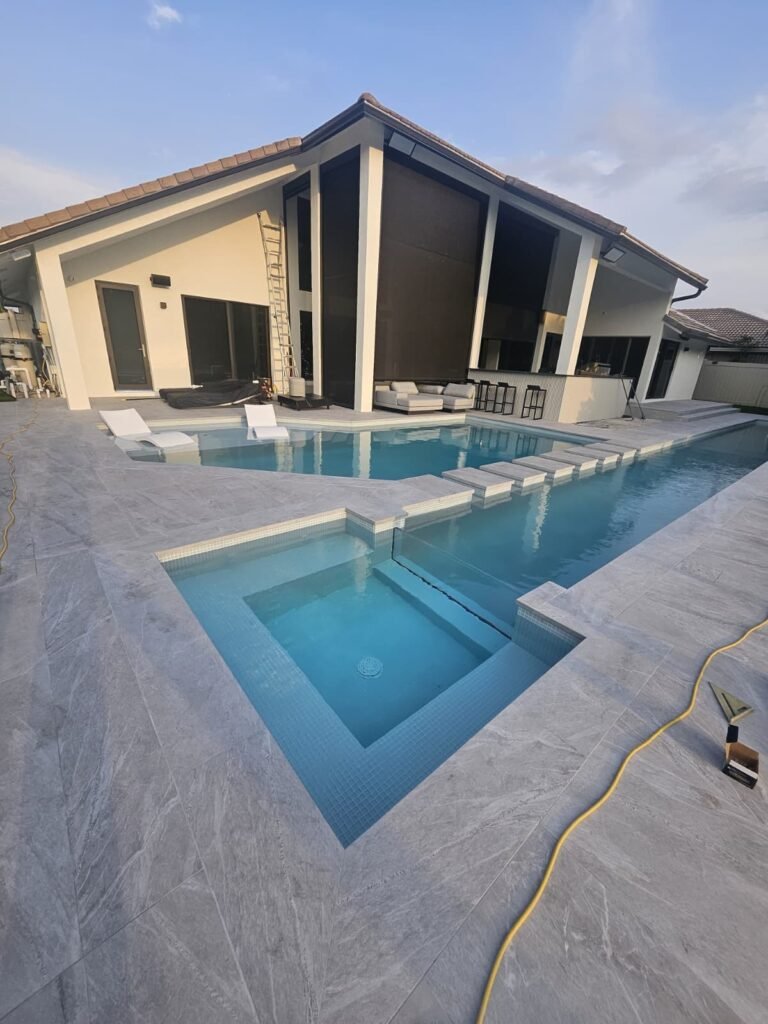
Rectangular pools are especially popular with modern and contemporary South Florida homes.
Why Geometric Pools Are Popular
They integrate easily with:
- Modern architecture
- Porcelain decks
- Linear fire features
- Raised spas
- Sheer descents
- Outdoor kitchens
- Minimalist landscaping
They can also provide efficient swimming areas while maintaining a clean visual appearance.
Freeform Inground Pools
Freeform pools use curves and organic shapes.
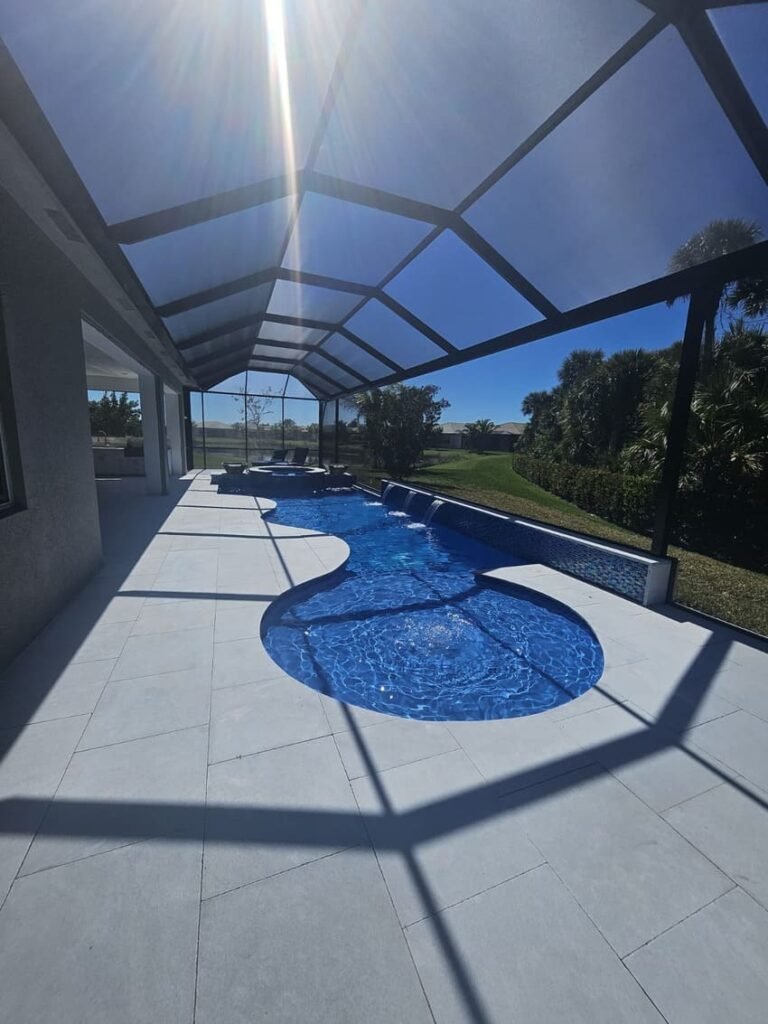
They are particularly appropriate for tropical, Mediterranean, and resort-inspired properties.
Creating a Resort-Style Pool
Freeform designs can incorporate:
- Natural stone
- Tropical landscaping
- Waterfalls
- Beach-style entries
- Curved sun shelves
- Rock features
The goal is often to make the pool feel integrated into the surrounding landscape.
Lap Pools
Long, narrow pools can be designed primarily for swimming and exercise.
They may work particularly well on properties where the available backyard is narrow.
A lap pool can still incorporate entertainment features while maintaining enough uninterrupted length for swimming.
Plunge Pools
Plunge pools are compact pools designed primarily for relaxation and cooling rather than extensive swimming.
They can be an excellent option for smaller South Florida backyards where a traditional large pool would consume too much space.
Premium finishes, built-in seating, jets, and landscaping can make a small plunge pool feel highly customized.
Infinity Pools
Infinity or vanishing-edge pools allow water to flow over one or more edges into a catch basin.
When designed around a view, the water can appear to merge with the surrounding horizon.
Where Infinity Pools Work Best
They are particularly effective on:
- Waterfront properties
- Canal-front homes
- Elevated lots
- Properties with open views
Infinity pools require specialized engineering, waterproofing, plumbing, and hydraulic design and generally cost more than conventional inground pools.
Best Inground Pool Features
Pool features should be chosen according to how homeowners expect to use the backyard.
Adding every available feature does not necessarily create a better pool.
A carefully selected group of features often creates a more functional and visually cohesive result.
Integrated Spa
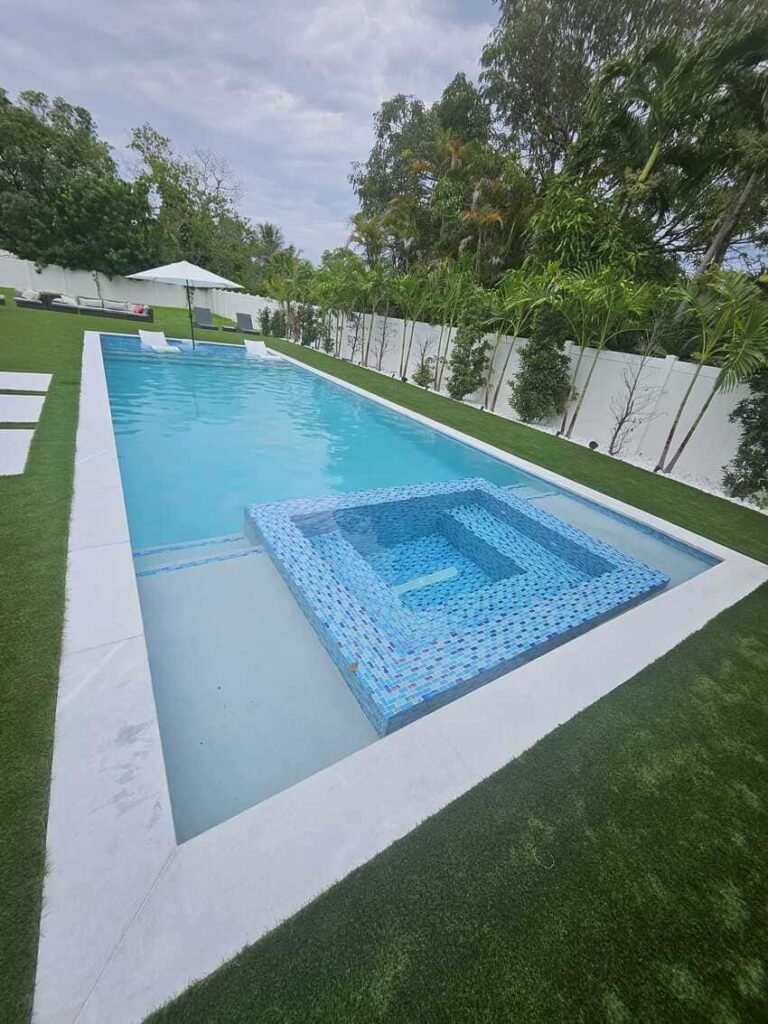
A spa is one of the most popular additions to a custom inground pool.
It can be installed at pool level or raised to create an architectural focal point.
A raised spa can incorporate a spillway that sends water into the pool below.
Benefits of Building the Spa With the Pool
Including the spa during original construction allows the structure, plumbing, heating, finishes, and automation to be planned together.
Adding a spa later may require substantially more structural modification.
Sun Shelf or Tanning Ledge
A sun shelf creates a shallow section where homeowners can relax partially submerged.
It can accommodate:
- In-pool loungers
- Umbrellas
- Bubblers
- Small water features
Sun shelves are especially popular in South Florida because they support casual, resort-style pool use.
Pool Water Features
Water features can introduce movement, sound, and architectural detail.
Popular options include:
- Waterfalls
- Sheer descents
- Scuppers
- Bubblers
- Deck jets
- Spa spillways
Water features should be integrated into the hydraulic system and overall design rather than added without considering circulation, energy use, and maintenance.
LED Pool Lighting
Lighting can dramatically change how a pool looks after sunset.
LED fixtures can illuminate swimming areas, steps, spas, and architectural features.
Lighting should be planned before construction so fixture placement and electrical infrastructure can be incorporated into the design.
Pool Automation
Modern automation can simplify pool ownership by allowing homeowners to control multiple systems from a central interface or compatible mobile application.
Depending on the system, automation can manage:
- Pumps
- Heating
- Lighting
- Spa operation
- Water features
- Valves
- Filtration schedules
Automation can be particularly useful for pools with several integrated features.
Pool Heater
Although South Florida has a warm climate, water temperatures can still become uncomfortable during cooler periods.
Heat pumps are commonly considered for regular pool heating, while gas systems can be attractive when rapid heating is important, particularly for spas.
Solar heating is another possibility depending on roof exposure and system design.
Best Interior Finishes for Inground Pools
Concrete pools require an interior finish that creates the final submerged surface.
The most common options include plaster, quartz, and pebble aggregate.
Plaster Pool Finish
Traditional plaster provides a smooth, classic appearance and generally has a lower initial cost.
However, it may require resurfacing sooner than premium aggregate materials.
Quartz Pool Finish
Quartz provides additional durability and color options compared with basic plaster.
It is often selected by homeowners who want a balance between price, appearance, and longevity.
Pebble Pool Finish
Pebble aggregate is commonly used in premium custom pools.
It offers natural texture, rich water colors, and strong potential durability when correctly installed and maintained.
Homeowners should evaluate texture preferences because pebble surfaces can feel different from smooth plaster.
Best Pool Deck Materials for Inground Pools
The deck is one of the largest surfaces in the backyard and should be considered part of the overall pool design.
Popular South Florida options include:
- Travertine
- Porcelain pavers
- Concrete pavers
- Natural stone
- Finished concrete
Material selection should consider heat, slip resistance, drainage, maintenance, durability, and architectural compatibility.
Travertine Pool Decks
Travertine provides a natural appearance and is frequently used around South Florida pools.
Light-colored varieties can be attractive for areas receiving substantial sunlight.
Porcelain Pool Decks
Exterior-rated porcelain offers low water absorption, relatively easy maintenance, and extensive design options.
It is particularly popular with modern geometric pools.
Concrete Pavers
Concrete pavers provide numerous colors, patterns, and price points.
Individual pieces can also often be replaced if localized damage occurs.
Inground Pool Permits in South Florida
Building an inground pool generally requires permits and inspections.
Requirements vary by municipality and property.
A project may involve approvals related to:
- Structural construction
- Electrical systems
- Plumbing
- Gas
- Zoning
- Setbacks
- Pool barriers
- Drainage
Waterfront properties, properties within homeowners associations, and sites with unusual conditions may require additional approvals.
Experienced local pool builders should understand the permitting process applicable to the project location.
Pool Safety Requirements
Safety must be incorporated into the project from the beginning.
Applicable Florida and local requirements may involve barriers, gates, alarms, or other protective measures depending on the property and pool design.
Homeowners should work with their contractor and applicable local authorities to ensure the completed pool complies with current requirements.
Safety should never be treated as an optional upgrade.
South Florida Groundwater and Pool Construction
Groundwater is an important consideration when building pools in South Florida.
The contractor must account for site conditions during excavation and construction.
Groundwater considerations are also important later when an existing pool is drained for major maintenance or resurfacing. Hydrostatic pressure can create serious risks if draining is handled incorrectly.
Homeowners should avoid draining inground pools without professional guidance.
Drainage Around an Inground Pool
Heavy South Florida rainfall makes proper backyard drainage essential.
The pool deck should be designed to move water appropriately rather than allowing runoff to collect around structures or continuously enter the pool.
Depending on the property, drainage may include:
- Deck drains
- Channel drains
- Landscape drainage
- Grading
- Underground drainage systems
Drainage should be incorporated into the design rather than addressed only after water problems develop.
How Long Does It Take to Build an Inground Pool?
The complete process can take several months from design through final startup, but there is no universal construction timeline.
A custom pool project typically moves through several phases.
Design and Planning
The homeowner and contractor establish pool dimensions, features, materials, equipment, and overall backyard layout.
Engineering and Permitting
Plans are prepared and submitted to the appropriate authorities.
Approval timelines vary by jurisdiction and project complexity.
Excavation
Once approvals are obtained and the site is prepared, excavation begins.
Structural Construction
Steel reinforcement, plumbing, and the structural shell are installed according to the project design.
Electrical and Equipment Installation
Pumps, filtration systems, lighting, automation, heating, and other mechanical components are installed.
Tile and Coping
Waterline tile and coping create important visual transitions around the pool.
Pool Deck Construction
The surrounding deck is installed according to the design and drainage plan.
Interior Finish
The selected plaster, quartz, pebble, or other finish is installed near the final stage.
Filling and Startup
The pool is filled and the water chemistry startup process begins.
Weather, inspections, material availability, design changes, permitting, and site conditions can all influence the final schedule.
How Much Does It Cost to Maintain an Inground Pool in South Florida?
Maintenance costs depend on pool size, equipment, sanitation system, landscaping, usage, and whether the homeowner performs maintenance personally or hires a professional service.
Ongoing expenses may include:
- Chemicals
- Electricity
- Cleaning
- Filter maintenance
- Equipment repairs
- Heating
- Water
- Periodic surface maintenance
Homeowners should consider these long-term costs when determining the total budget for pool ownership.
Saltwater vs. Chlorine Inground Pools
Saltwater pools still use chlorine. A salt chlorine generator converts dissolved salt into chlorine for sanitation.
Traditional systems generally require chlorine to be added through other methods.
Both systems require proper water chemistry and maintenance.
The best choice depends on homeowner preferences, equipment costs, maintenance habits, and the materials used throughout the pool environment.
Energy-Efficient Inground Pool Equipment
Energy efficiency can reduce long-term operating expenses.
Important equipment considerations include:
- Variable-speed pumps
- LED lighting
- Efficient heating
- Properly sized filtration
- Automation
- Optimized circulation schedules
The goal should be to design the equipment system around actual pool requirements rather than simply installing oversized components.
Inground Pools for Small South Florida Backyards
A limited backyard does not necessarily prevent homeowners from building an attractive pool.
Small properties often benefit from intentional design.
Compact Geometric Pools
A simple rectangular pool can maximize usable swimming area without consuming unnecessary space.
Plunge Pools
A plunge pool provides water for relaxation and cooling while preserving space for seating and landscaping.
Built-In Seating
Integrated benches reduce the need for large amounts of poolside furniture.
Vertical Design Elements
Raised walls, landscaping, and architectural features can create visual interest without occupying substantial floor area.
The objective should be to balance pool size with usable deck and entertainment space.
Inground Pool Ideas for Luxury Homes
Luxury pool design focuses on creating a complete environment rather than adding features individually.
Popular combinations include:
- Geometric pool with raised spa
- Infinity edge overlooking the water
- Large sun shelf with loungers
- Glass tile
- Pebble interior finish
- Porcelain or natural stone decking
- Fire bowls
- Architectural water features
- Outdoor kitchen
- Covered entertainment space
- Landscape lighting
- Smart automation
The strongest designs use a consistent architectural language throughout the backyard.
Common Inground Pool Construction Mistakes
Avoiding planning mistakes can save homeowners substantial time and expense.
Choosing a Pool That Is Too Large for the Backyard
A large pool may leave insufficient space for circulation, seating, landscaping, and entertainment.
The entire backyard should be planned before determining final pool dimensions.
Choosing a Contractor Based Only on Price
The lowest proposal may not include the same materials, equipment, engineering, decking, or construction scope as another estimate.
Homeowners should compare specifications, not just totals.
Adding Features Without a Complete Design
Randomly combining spas, waterfalls, fire features, and decorative elements can create a visually crowded backyard.
Features should support one cohesive concept.
Ignoring Long-Term Maintenance
Premium pools still require ongoing care.
Material and equipment decisions should consider future maintenance requirements.
Underestimating Deck Space
Homeowners often focus on pool dimensions and overlook how much room is needed for loungers, tables, pathways, and entertainment.
Making Major Changes During Construction
Changes after construction begins can increase both costs and project duration.
Finalizing important decisions before excavation helps reduce change orders.
How to Compare Inground Pool Quotes
Pool estimates should be compared line by line.
Look for specifications related to:
- Pool dimensions
- Depth
- Structural construction
- Interior finish
- Tile
- Coping
- Deck square footage
- Equipment brands and models
- Lighting
- Heating
- Automation
- Spa
- Water features
- Engineering
- Permits
- Safety requirements
- Cleanup
- Landscaping
- Warranties
If one estimate appears substantially cheaper, determine whether the scope is actually equivalent.
How to Choose an Inground Pool Builder in South Florida
Building an inground pool requires coordination between design, engineering, excavation, structural construction, plumbing, electrical systems, finishes, decking, equipment, inspections, and permitting.
The contractor should therefore be evaluated on more than price.
Look for:
- South Florida construction experience
- Appropriate licensing and insurance
- Portfolio of completed pools
- Detailed project proposals
- Transparent contracts
- Quality materials
- Reliable equipment
- Knowledge of local permitting
- Clear communication
- Project management
- Warranty information
Homeowners planning a complete backyard transformation may also benefit from working with a company capable of coordinating the pool with surrounding outdoor living features.
Frequently Asked Questions About Inground Pools in South Florida
How Much Does an Inground Pool Cost in South Florida?
A professionally installed inground pool may broadly begin around $60,000 to $80,000, while customized projects can reach $80,000 to $150,000 or more. Luxury pools and complete outdoor living projects can exceed $150,000 to $300,000 depending on design and scope.
What Is the Best Type of Inground Pool for South Florida?
There is no universal best option. Concrete pools offer extensive customization, while fiberglass can provide a more standardized installation. The best choice depends on budget, property, design goals, and long-term priorities.
Are Concrete Pools Good for Florida?
Concrete pools are widely used in Florida and provide extensive flexibility in shape, depth, size, finishes, spas, sun shelves, and water features. Proper engineering and professional construction are essential.
How Long Does It Take to Install an Inground Pool?
The complete process may take several months, but timelines vary according to permitting, weather, design complexity, inspections, materials, and site conditions.
Do I Need a Permit for an Inground Pool in South Florida?
Yes, inground pool construction generally requires permits and inspections. Exact requirements depend on the local jurisdiction and property.
Can I Build an Inground Pool in a Small Backyard?
Potentially, yes. Plunge pools, compact geometric pools, and carefully planned custom designs can work well in smaller spaces, provided the property meets applicable setbacks and other requirements.
Is an Inground Pool Worth It in South Florida?
For homeowners who value outdoor living and expect to use the pool regularly, an inground pool can provide substantial lifestyle value. Its financial impact on resale depends on the property, neighborhood, pool quality, condition, and market.
Does an Inground Pool Increase Home Value?
A professionally designed and maintained pool may improve buyer appeal and contribute to property value in some South Florida markets, but no specific increase or return on investment is guaranteed.
Can You Add a Spa to an Inground Pool?
Yes. A spa can be incorporated during original construction or potentially added to an existing concrete pool through remodeling. Including it in the original design is generally more straightforward.
What Is the Best Pool Finish for an Inground Concrete Pool?
Plaster provides a traditional lower-cost option, quartz balances durability and appearance, and pebble is often selected for premium durability and aesthetics. The best option depends on budget and homeowner preferences.
Final Thoughts
Building an inground pool in South Florida is a major investment, but the project can completely transform how a homeowner uses the property.
The key is to think beyond the pool itself.
Construction type, dimensions, depth, spa, sun shelf, interior finish, tile, coping, deck, equipment, lighting, heating, automation, landscaping, drainage, and entertainment areas should all be considered as parts of one complete design.
Concrete pools provide exceptional customization for homeowners who want a pool specifically designed around their property, while other construction systems may be appropriate for homeowners with different priorities.
Regardless of the pool type, careful planning is essential.
Establish a realistic total budget, compare contractor proposals in detail, understand what is included, and select materials and features according to how the backyard will actually be used.
A well-designed inground pool should not feel like an isolated structure placed in the yard. It should become part of a cohesive outdoor living environment built around the home, landscape, and South Florida lifestyle.
Build Your Inground Pool With Elegance Pools & Outdoors Construction
Elegance Pools & Outdoors Construction specializes in custom concrete pools and complete outdoor living spaces throughout South Florida.
With more than 13 years of experience and over 300 completed projects, our team understands the unique design, construction, and environmental considerations involved in building pools for South Florida homes.
Our 100% in-house team manages every phase of the project, providing direct control over craftsmanship, communication, and construction quality from planning through final delivery.
Whether you are considering a modern geometric pool, integrated spa, sun shelf, water features, premium decking, outdoor kitchen, or a complete luxury backyard transformation, Elegance Pools & Outdoors Construction can develop a project around your property, lifestyle, and goals.
Contact Elegance Pools & Outdoors Construction today to schedule a consultation and request a customized estimate for your inground pool project in South Florida.